


In This Issue, We’ll Cover:
→ What 6,000 workers just revealed about where AI adoption actually stands
→ The gap nobody is talking about honestly
→ What happens if you do not close it
→ The working session built for exactly this moment
A new report from Notion surveyed more than 6,000 workers across 10 countries to understand where organizations actually are with AI. Not where they say they are. Where they actually are.
The finding that should stop every UX practitioner in their tracks: 57% of organizations are still at the earliest stage of AI adoption. Most teams are using AI to brainstorm and draft. Not to run workflows. Not to make decisions. Not to do the work that actually moves organizations forward.
But here is what does not make the headline.
The companies investing most aggressively in AI are also the ones saying their employees are not prepared to use it. That number climbs from 48% at the earliest stage all the way to 68% at the most advanced. The further along an organization is with AI, the wider the gap between what they have built and what their people know how to do with it.
The more advanced the company, the more behind their employees feel.
If you are a designer, researcher, content strategist, or anyone working in the UX space right now, this data is describing your situation. Your organization has already made a bet on AI. The tools are there. The expectations are shifting. Quietly, and faster than most people realize, the definition of what makes someone valuable at work is changing.
And most practitioners are still trying to figure out where they fit.
The Part Nobody Says Out Loud
This is not showing up in performance reviews yet. It is not in the job description. But it is in the room during every product review, every research readout, every design critique where someone asks a question you are not sure how to answer anymore.
The practitioners who are pulling ahead right now are not the ones who know the most tools. According to the same report, they are the ones who have figured out how to use AI to do work they previously could not do, make better decisions faster, and communicate value to the people who control budgets and headcount.
That is a specific skill. And it is learnable. But it does not come from watching a webinar or reading another article about prompt engineering.
It comes from doing the work. In a room. With people who have already figured it out.
🟢 EVENT
Upskill AI: Repositioning For The New Economy
📅 July 23, 2026 · 12 to 4PM
📍 Silver Spring Civic Building, Silver Spring, MD
This is a 4-hour working session, not a lecture. You will sit down with your actual resume, your actual pitch, and your actual positioning and rebuild them using AI tools that are already reshaping how hiring works right now.
Led by three founders who have hired, been hired, repositioned, and built through this economy from the inside:
Jake DiBattista · Founder & CEO, Buddy
Evan Katz · Founder & CEO
Yao Adantor · Founder & CEO, UXU
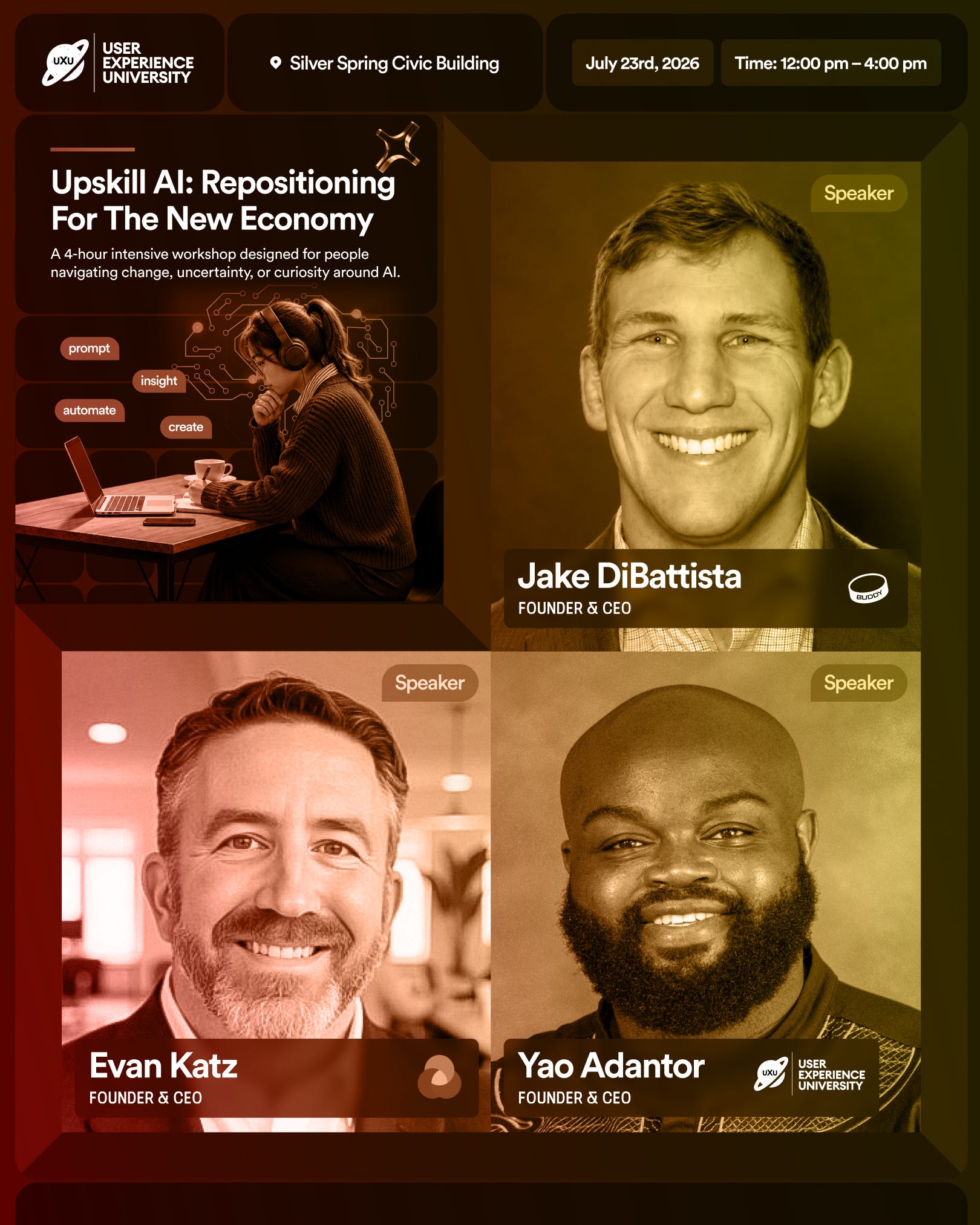
They are not here to teach theory. They are here to work with you on the thing that actually matters: how you show up to this market, today.
You will leave with a finished output, sharper positioning, and one specific next step you chose before you walked out.
The gap between where organizations are and where they expect their people to be is not closing on its own. Six months from now you will either be someone who closed it or someone who is still thinking about it.
Spots are limited and this one fills fast.
📚 Resource Corner
→ The Great Renovation: Notion’s Global AI Transformation Report · The full data behind what AI adoption actually looks like across 10 markets right now
→ 10 Best AI Resume Tailoring Tools in 2026 · Which tools actually pass ATS screening and which are overhyped
→ The 6 Best AI Resume Builders in 2026 · Zapier’s breakdown including free options worth starting with
Final Thought
The data already told you where things are heading. The only question left is what you do with that information.