



Think about an app you genuinely love. Not one you use because you have to. One you are actually fond of.
Now think about the why. It probably works well, but “works well” is not why you love it. Plenty of products work well and inspire nothing. What you love is how it makes you feel. Calm. Capable. Delighted. Understood. Maybe it made you smile once when you did not expect to.
That feeling, not the feature list, is what turned a tool you use into a product you love.
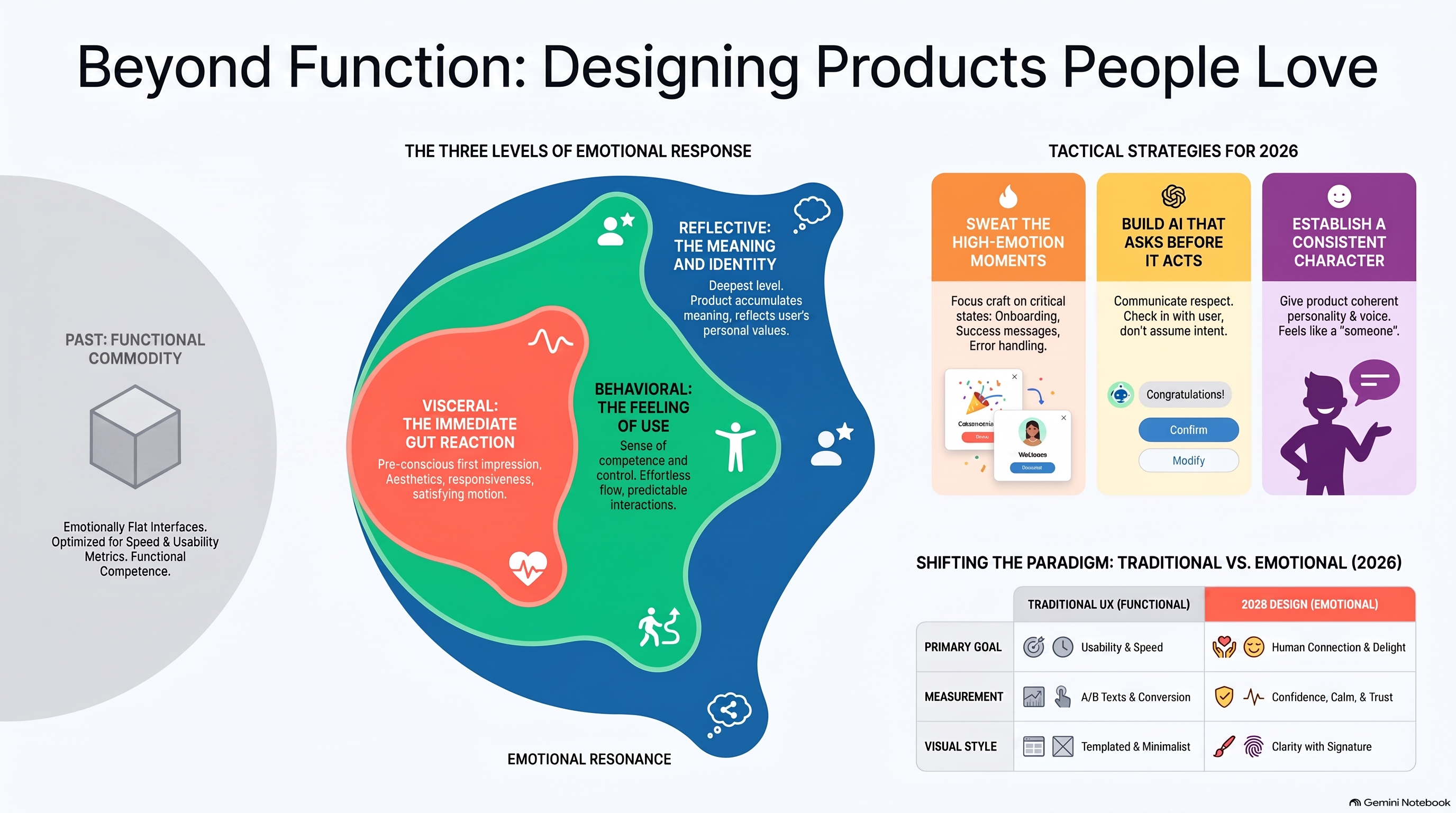
For years, the field optimized hard for the functional stuff, metrics, speed, usability, and something quietly got lost along the way. Interfaces became clean, efficient, and emotionally flat. In 2026, the pendulum is swinging back, and emotional design is at the center of it.
This issue is about the difference between products people use and products people love, and how to design for the second one.
In this issue, we’ll cover:
Why interfaces got emotionally flat
The 3 levels every product is felt on
What emotional design actually is (and is not)
Designing feeling into real products
Why this matters more in the age of AI
More resources on Emotional design
Why interfaces got emotionally flat
For years, product design got better at what it could measure: usability, conversion, speed, and efficiency.
The problem is something like emotion is much harder to put on a dashboard.
You can track whether someone completed a task but it is harder to measure whether the experience felt warm, memorable, playful, or reassuring. So those qualities slowly became secondary.
The result has been a generation of products that work beautifully but often feel the same: clean, efficient, and emotionally forgettable.
Now the pendulum is swinging back and teams are rediscovering that usability and personality are not opposites. The best products can be clear, functional, and still feel like they have a pulse.
The three levels every product is felt on
Don Norman’s Emotional Design gives us a useful way to understand why some products simply work, while others actually stay with us. He describes three levels of emotional experience:
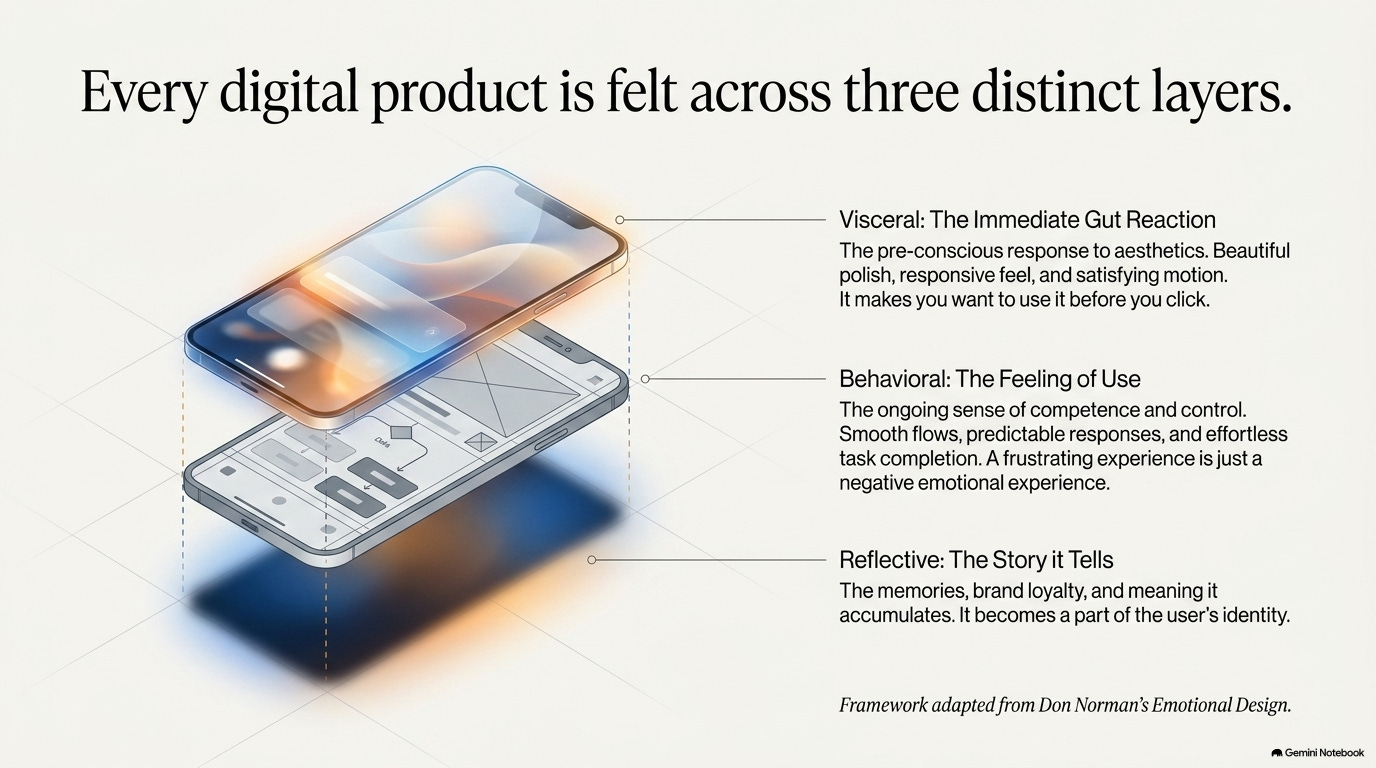
1️⃣ Visceral: the immediate gut reaction
This is what happens before we have even properly used the product. The visual style, motion, responsiveness, and overall polish create an instant feeling: this looks good, this feels good, I want to explore it.
2️⃣ Behavioral: the feeling of using it
This is the emotion created by the experience itself. Does the product feel intuitive? Does it respond the way you expect? Does completing a task feel effortless or frustrating? Good usability creates a quiet sense of confidence and control.
3️⃣ Reflective: what the product comes to mean
This is the deeper layer: the identity, memories, and meaning we attach to a product over time. It is why people become loyal to certain tools or brands, even when plenty of alternatives exist.
The insight for 2026 is that these three layers map almost perfectly onto where interfaces are heading, and the best products are starting to trigger all three intentionally rather than accidentally.
Quick pause. This one is especially fitting.
🎯 UXCON26 · One Day · With The Author of Emotional Design
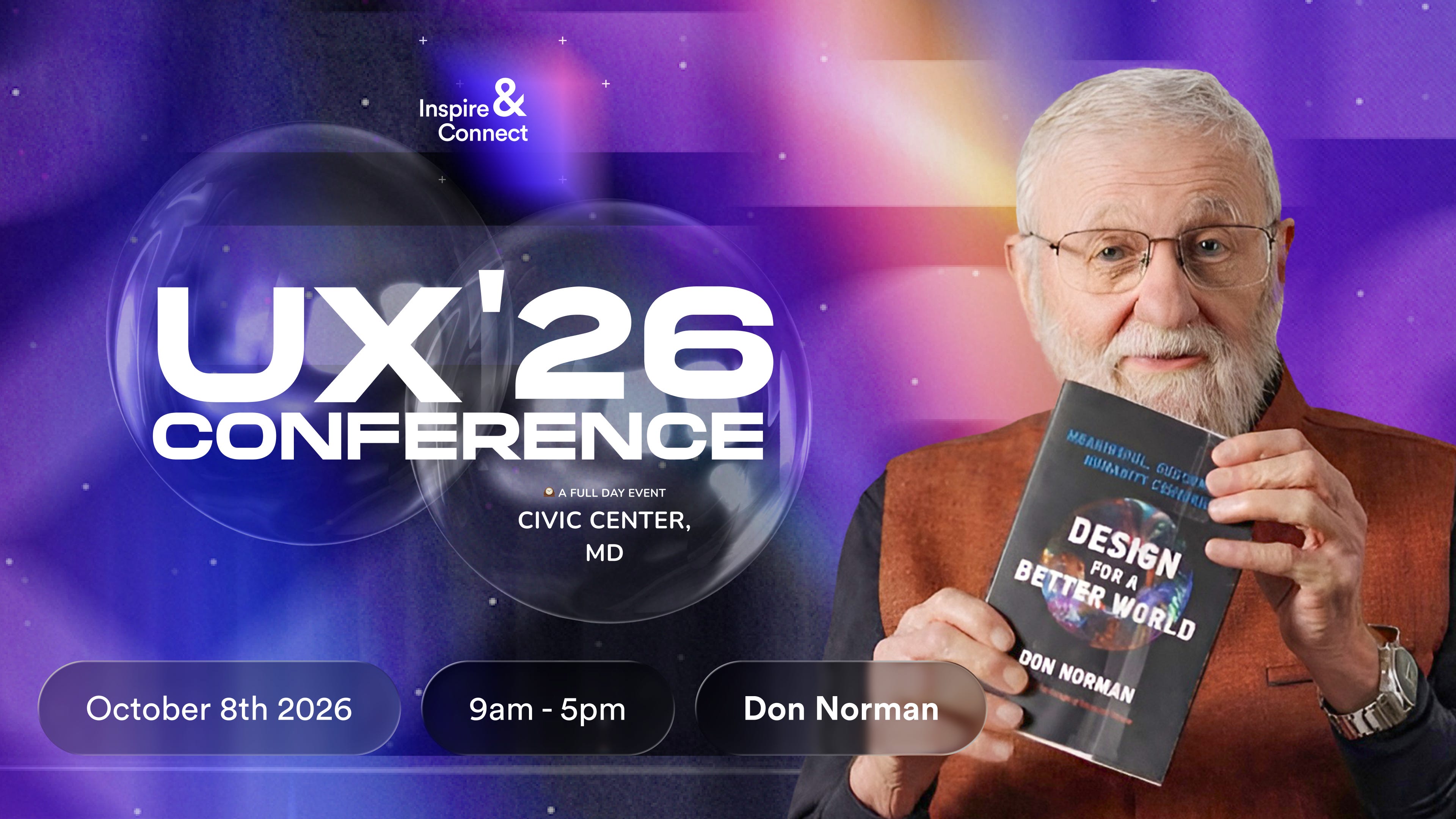
On October 8, 2026, Norman headlines UXCON26, still publishing and still challenging this field at 88. If emotional design resonates with you, this is the rare chance to hear the thinking behind it from the source, in one room, alongside practitioners from Netflix, The New York Times, Target, UserTesting, and Skylight, hosted by Jeremy Miller of the Beyond UX Design podcast.
Three keynotes. Two panels. One day that reconnects you to why this work matters.
What emotional design actually is (and is not)
Emotional design is often mistaken for adding more personality to an interface: a mascot here, some confetti there, maybe a playful animation after a task is complete.
But that is only surface-level.
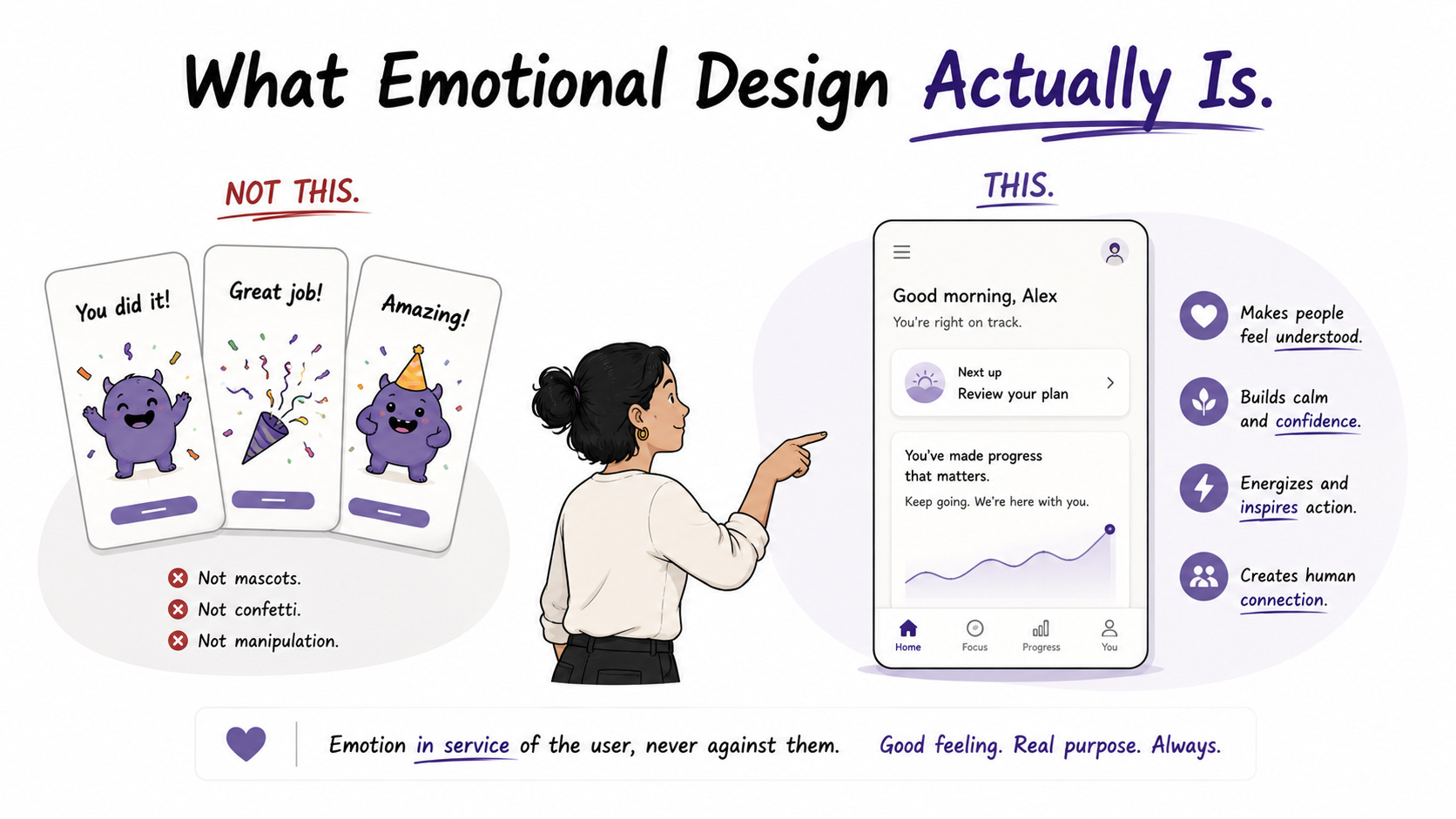
At its core, emotional design is about intentionally shaping how a product makes someone feel. Does it make them feel confident? Reassured? Energized? Understood? Those feelings can become just as important as whether the product technically works.
That is why the strongest experiences do more than solve a problem. They create a sense of connection and give the product a character people can recognize and remember.
We are already seeing this show up in more expressive interfaces: typography with personality, motion that helps explain what is happening, distinctive visual systems, and interactions that feel considered rather than templated.
But there is an important line to protect.
Emotion should work in service of the user, not against them. The same techniques that create delight can also create pressure, urgency, or manipulation. Done well, emotional design strengthens the experience. Done poorly, it is simply a friendlier-looking dark pattern.
Designing feeling into real products
Emotional design becomes real through the small decisions people encounter while using a product.
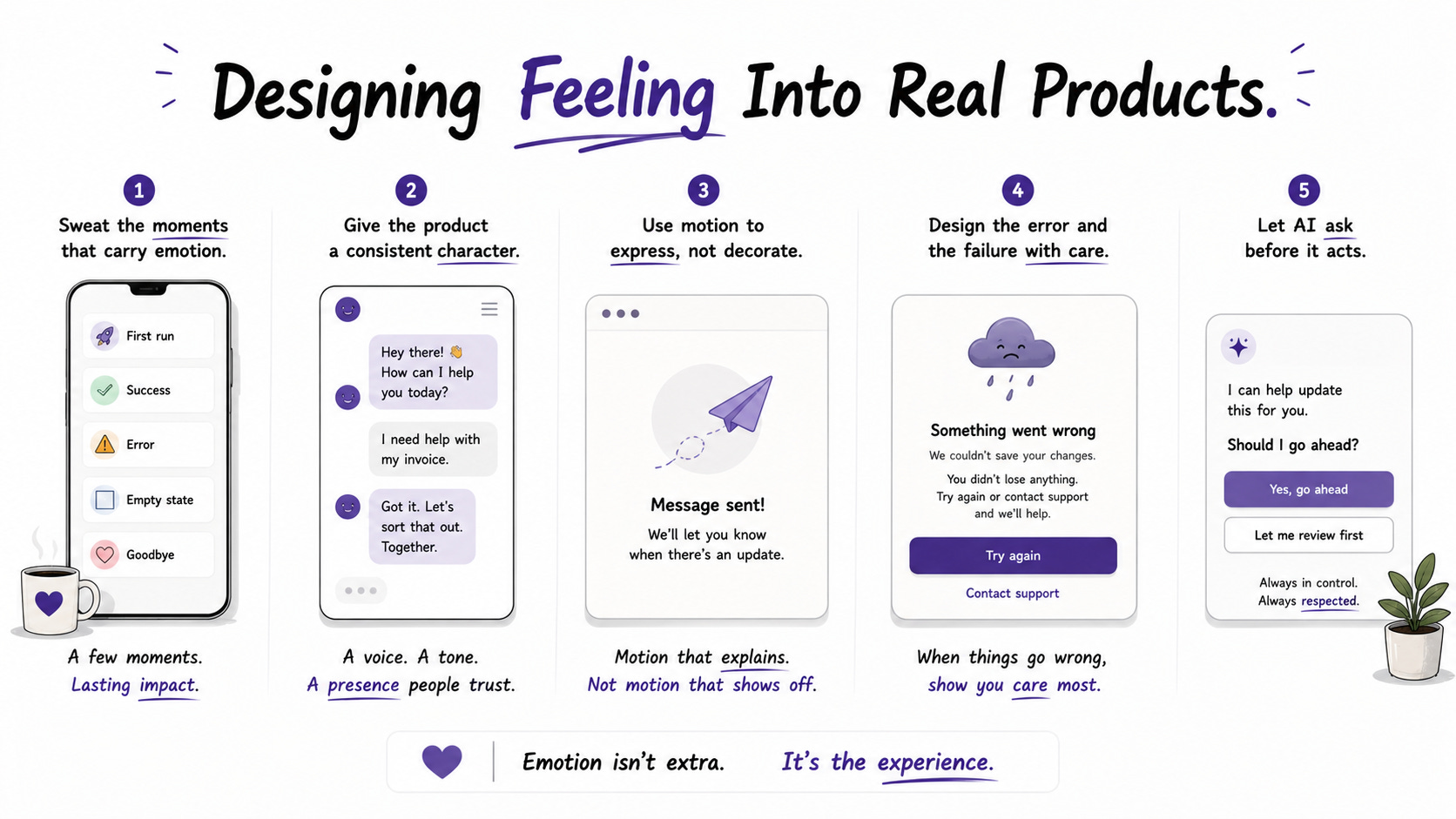
🔵 Focus on the moments people actually remember
Not every screen needs personality. Put more care into moments with emotional weight: onboarding, success, empty states, errors, and goodbyes. A thoughtful message at the right moment often matters more than adding delight everywhere.
🔵 Give the product a recognizable character
The strongest products tend to have a consistent voice and way of behaving. That character might be calm and reassuring, playful and energetic, or direct and competent. What matters is that it feels intentional and consistent across the experience.
🔵 Use motion with a purpose
Good motion should help communicate what is happening, reduce uncertainty, or add emphasis. The goal is not animation for animation’s sake, but movement that makes the experience clearer and more satisfying.
🔵 Treat failure as a design moment
People often remember how a product treated them when something went wrong. Clear explanations, helpful next steps, and empathetic language can turn frustration into trust.
🔵 Let AI collaborate, not take over
As AI becomes more embedded in products, good experiences will increasingly be the ones that check intent before acting. Asking, confirming, and giving users control can make an intelligent product feel respectful rather than intrusive.
Why this matters more in the age of AI
AI is making functional design easier to produce. Clean layouts, usable flows, polished copy, and competent interfaces can now be generated faster than ever.
That means “it works” is becoming less of a differentiator.
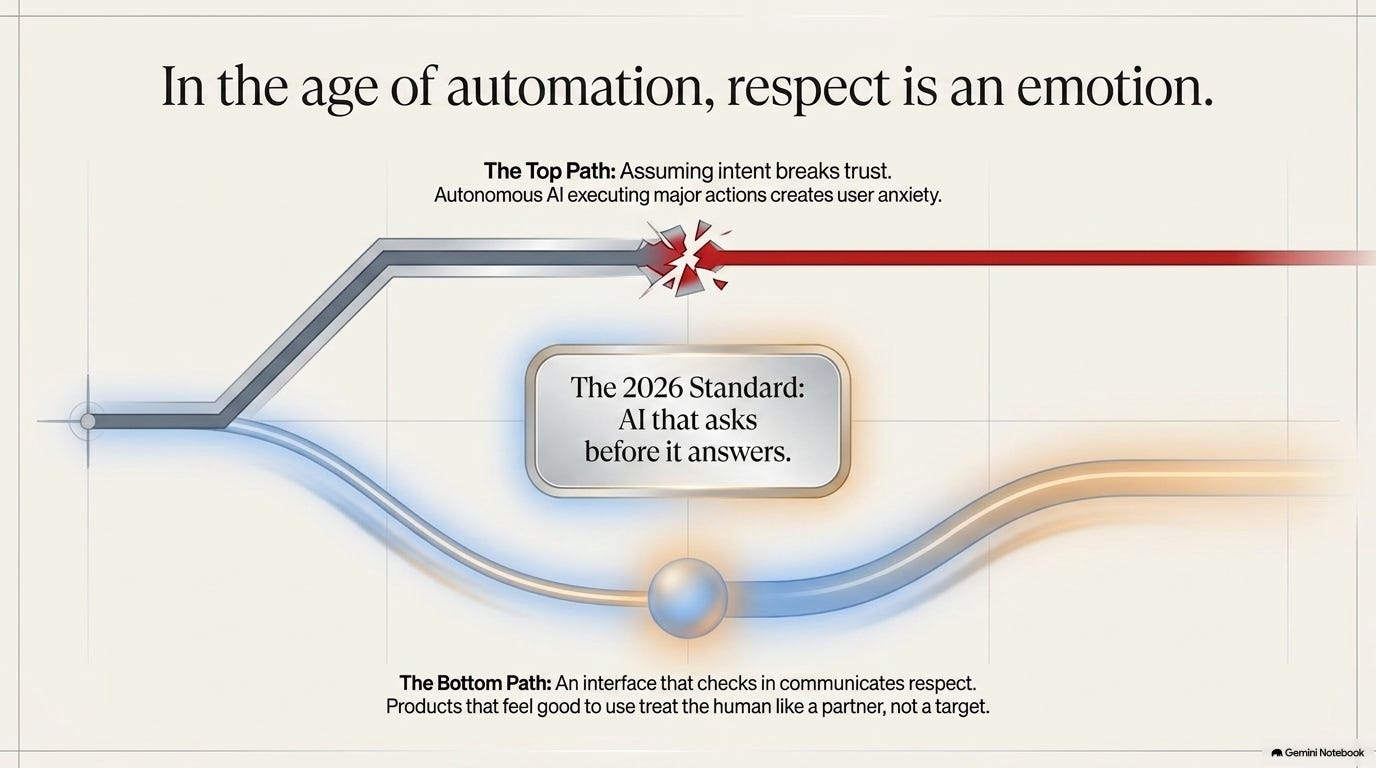
What becomes more valuable is what is harder to automate: understanding the people behind the interaction. Their anxieties, expectations, motivations, and the feeling they should leave with.
In a sea of increasingly similar AI-generated experiences, products with warmth, character, and a clear point of view are more likely to stand out and be remembered.
AI can help produce the interface. But deciding how an experience should feel, why that feeling matters, and what it should mean to the person using it still requires deep human understanding.
That is what makes emotional design less of a decorative skill and more of a competitive one.
📦 Resource Corner
Emotional Design by Don Norman
The foundational read on the three levels of emotional response and how emotion shapes product experiences.
Designing for Emotion by Aarron Walter
A practical guide to adding personality, warmth, and emotional connection to digital products.
The Most Popular Experience Design Trends of 2026 by Joe Smiley (UX Collective)
A useful look at why emotional design is resurfacing and how it connects to current interface trends.
What’s Next: 7 UI Design Trends of 2026 (Tubik)
Explores the return of visual character, expressive interfaces, and “clarity with signature.”
Hooked by Nir Eyal
A look at the psychology behind product habits and emotional connection, best read with an ethical lens.
💭 Final Thought
Clean, usable, efficient products still matter. But people are not efficiency machines. They remember how a product made them feel, whether it gave them confidence, reduced friction, felt thoughtful, or simply had a little character.
That is where the opportunity is now: pairing the rigor of good UX with the emotional craft that makes an experience memorable.
Make it work. Then make it feel like something.


