



For years, UX research ended in a report.
Slides.
Summaries.
Insights neatly packaged into decks.
The goal was clarity:
Document what we learned and share it with stakeholders.
But something is changing.
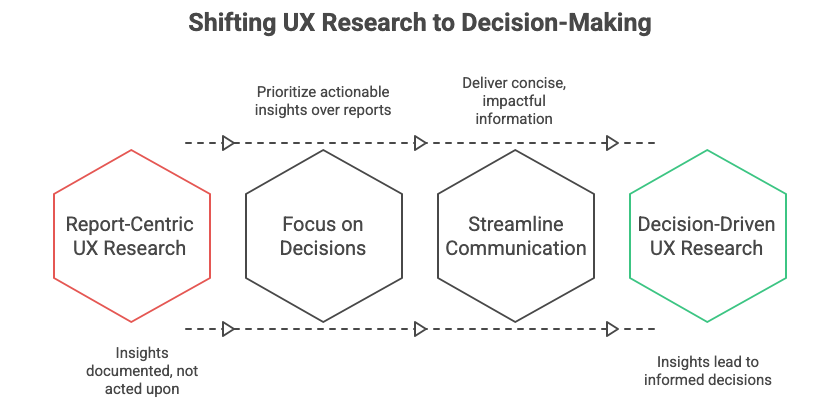
In many teams, research reports are no longer the main output.
Not because research is less valuable.
But because teams now want something different.
They want decisions.
Not decks.
Not PDFs.
Not 40-slide summaries.
This shift is redefining what it means to be a UX researcher in 2026.
In This Issue
• Why traditional reports are declining
• What teams actually need now
• What is replacing research decks
• How the role of UXRs is evolving
• New influence models for researchers
• How to adapt your workflow
• Take-Home Exercise
• Resource Corner
But first…..
Master UX & Product Management Collaboration
You ever finish a meeting with the product team and think, what just happened?
You’re not alone.
The disconnect between UX and Product is one of the most common frustrations in the industry. And most people just learn to live with it. This March 5th, we’re bringing together five people who decided not to.

Ivan Carter — 20+ years as a product designer — brings the craft perspective. Leo Hoar, PhD Hoar built the UXR Institute because he got tired of research being ignored. Tadinee Marsili Marsili has spent 15 years turning design into strategy, not just output. Caitlin Cooper knows how to get the right decisions through organizations that don’t always make it easy. And Teyibo D. thinks about what design and product collaboration looks like at a systems level, across teams, companies, and communities.
Come hear them. Come ask the questions you’ve been sitting on. Come meet people in the DMV who are dealing with the same thing you are.
Thursday, March 5 · 6:00 to 9:00 PM EST Silver Spring Civic Building · Silver Spring, MD
back to where we stopped…..
Why traditional research reports are declining
Research reports were built for a different era.
An era where:
• Release cycles were slower
• Research was periodic
• Teams had time to read documentation
Today, product development is faster.
Teams ship weekly.
Roadmaps shift quickly.
AI accelerates iteration.
Long reports struggle to keep up with this speed.
By the time a report is read, priorities may already have changed.
This creates a mismatch between research speed and product speed.
The real problem isn’t reports
Reports are not “bad.”
They just optimize for documentation, not action.
Reports are good at:
• Preserving knowledge
• Creating archives
• Explaining context
But modern teams optimize for:
• Speed
• Decisions
• Direction
That difference matters.
What teams actually want now
Across startups and large orgs, teams are asking new questions:
Instead of:
“What did research find?”
They ask:
“What should we do next?”
This is a shift from information to direction.
Direction means guidance that helps teams choose a path.
In fast-moving teams, insight is only valuable if it shapes action.
What is replacing research decks
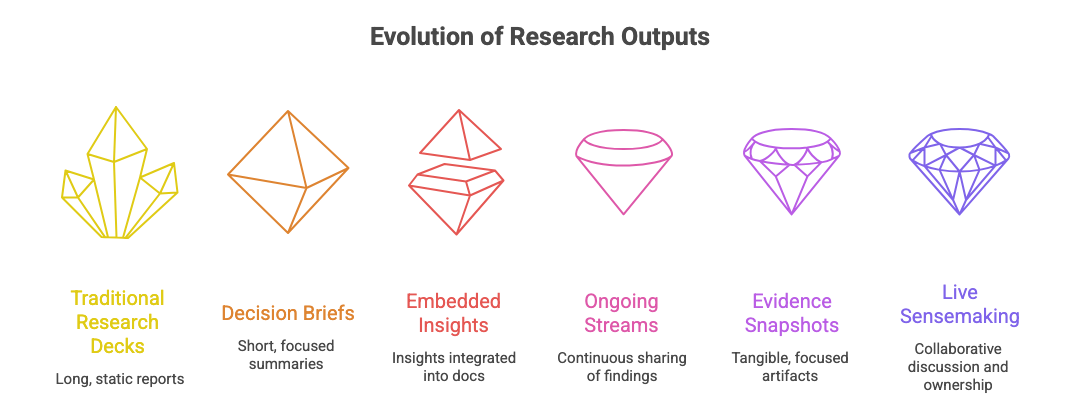
We are not seeing the end of research.
We are seeing the evolution of outputs.
Here are the formats gaining traction.
1. Decision briefs
Short, one-page summaries focused on:
• Key insight
• Risk
• Opportunity
• Recommendation
These help teams decide quickly.
2. Embedded insights
Instead of separate reports, insights now live inside:
• Product docs
• Roadmaps
• PRDs (Product Requirement Documents)
• Sprint planning notes
This keeps research close to execution.
3. Ongoing insight streams
Rather than one big report, researchers share:
• Weekly findings
• Slack updates
• Short videos
• Insight logs
Continuous sharing beats delayed synthesis.
4. Evidence snapshots
Small, focused artifacts like:
• 2-minute clips
• Highlight quotes
• Before/after comparisons
These make insights tangible.
5. Live sensemaking sessions
Instead of presenting results, researchers facilitate discussions.
Stakeholders engage directly with findings.
This increases ownership.
How the role of UX researchers is evolving
If outputs are changing, the role must change too.
Here is what we are seeing.
From reporters to advisors
Researchers are moving closer to decisions.
Not just sharing insights, but shaping choices.
From presenters to facilitators
Instead of presenting slides, researchers:
• Run workshops
• Guide prioritization
• Help teams interpret evidence
This builds influence.
From project-based to continuous
Research is becoming:
• Always-on
• Lightweight
• Embedded in teams
Less “big study,” more ongoing learning.
From neutral observers to strategic partners
Researchers are contributing to:
• Strategy discussions
• Roadmap planning
• Opportunity sizing
Insight becomes a strategic asset.
Why this shift is happening now
Several forces are driving this change.
1. Faster product cycles
Weekly releases reduce appetite for long synthesis cycles.
2. AI acceleration
AI tools help summarize and synthesize faster.
This reduces the need for long manual reports.
3. Stakeholder expectations
Leaders increasingly ask:
“What decision does this support?”
Insight must connect to outcomes.
4. Information overload
Teams are overwhelmed with documents.
Short, actionable insights cut through noise.
What this means for UXRs
If you work in research, this is not a threat.
It is a shift in leverage.
Your value moves from:
Producing artifacts → Shaping direction
This requires new skills:
• Framing decisions
• Communicating risk
• Translating insight into strategy
• Influencing without authority
These are leadership skills.
How to adapt your workflow
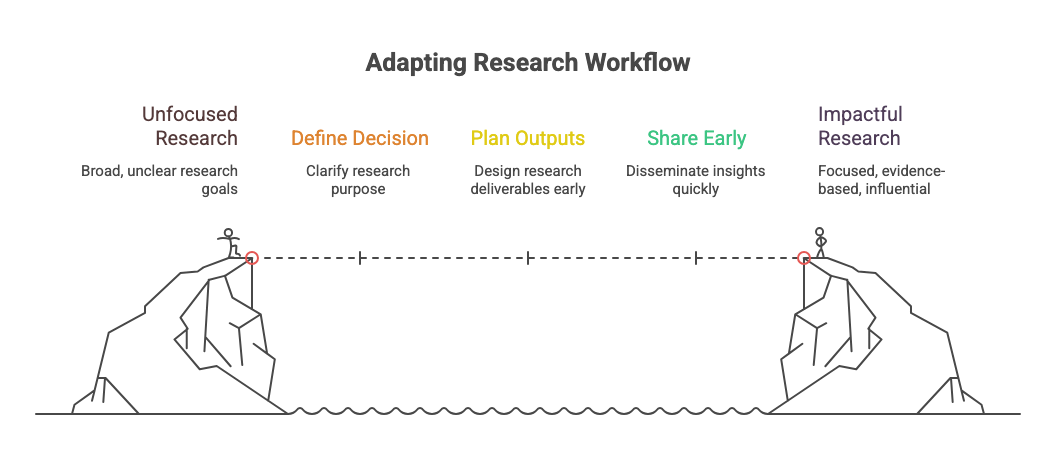
Here are practical changes researchers are making.
1. Start with the decision
Before running a study, ask:
“What decision will this inform?”
This keeps research focused.
2. Design outputs early
Plan your output before your study.
Example:
Will this become a decision brief?
3. Share before perfection
Early insights beat polished decks.
Speed increases impact.
4. Show evidence, not just summaries
Use clips, quotes, and examples.
Concrete evidence builds trust.
5. Stay close to product teams
Join planning sessions.
Join retros.
Join roadmap reviews.
Proximity increases influence.
Take-Home Exercise
Try this on your next research project.
Write the decision your research should influence
Limit your final output to one page
Include: insight, risk, recommendation
Share findings within 48 hours
Track what decision changed
This builds decision-driven research habits.
Resource Corner
State of UX 2026: Design Deeper to Differentiate
Final Thought
Research is not dying.
But the format is evolving.
In 2026, the most impactful researchers will not be known for their reports.
They will be known for the decisions they shape.
Less documentation. More direction. Less decks. More influence.
That is the new role of UX insight.


