


UX Gameboard Reveal: Last Week’s Winner!
Scenario Recap
Last week, we asked:
After a UX event, Ada connects with 12 people on LinkedIn.
Six months later, none of those connections have turned into conversations, collaborations, or opportunities.
Your Challenge
Identify one reason why Ada’s networking efforts didn’t stick.
Suggest one action she could take to turn future connections into real relationships.
💬 Let’s see what stood out!
Featured Answer: DLUx
“Ada hit ‘connect’ and then… nothing. A LinkedIn request by itself doesn’t build a relationship, it just sits there.
What she should do instead:
Message people within a day or two while the conversation’s still fresh. Something like:
‘Hey! Really enjoyed talking about [topic] yesterday. Just saw [article/resource] and immediately thought of you. Let me know what you think!’
It’s personal, it’s useful, and it gives them an actual reason to reply.
One real exchange is worth way more than a dozen silent contacts.”
👏 A powerful reminder that relationships grow through intention, not just contact lists.
Takeaway
Connections don’t become opportunities by accident.
They grow through relevance, timing, and genuine engagement.
For Today: UX Lives Beyond Job Titles. UX Is Empowerment.
Quick Take
“UX Designer” is a title. “UX thinking” is a mindset.
Real UX influence isn’t limited to one role.
This week, we’re exploring how UX creates impact far beyond labels.
Why Job Titles Are Becoming Less Important
Today, you’ll see roles like:
Product Designer
Research Ops Lead
Growth Strategist
Experience Manager
AI Product Specialist
But here’s the truth:
Many of these roles are practicing UX, even if they’re not called “UX.”
What matters now is not what you’re called.
It’s how you think and how you enable others to succeed.
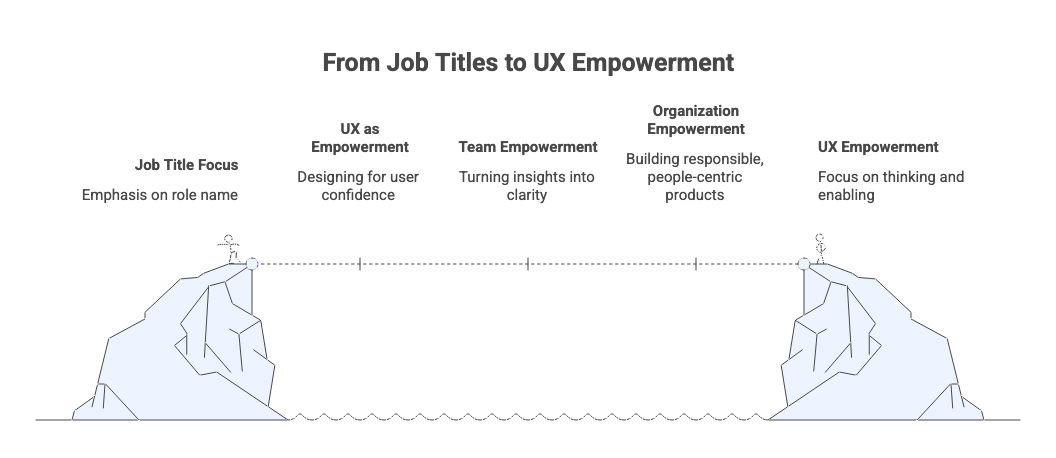
What UX as Empowerment Looks Like
1. Empowering users
Designing systems that help people feel confident, capable, and in control.
2. Empowering teams
Turning user insights into clarity that helps teams make better decisions.
3. Empowering organizations
Helping companies build products that serve people and scale responsibly.
When UX is done well, people don’t just use products.
They feel supported by them.
UX Gameboard Challenge
Scenario
Kim works as a “Product Operations Manager.”
She regularly runs user interviews, improves workflows, and translates feedback into roadmap decisions.
But she says, “I’m not really in UX.”
Your Challenge
Identify one limiting belief in Kim’s statement.
Suggest one way she can recognize and strengthen her UX influence.
💬 Think you know the answer? Drop your thoughts in the comments, your response might be featured in next week’s Gameboard reveal!
Take-Home Exercise (10 minutes)
Write down three things you’ve done recently that improved someone’s experience.
For each:
Who did it help?
What problem did it solve?
What decision did it enable?
You’re probably doing more UX than you think.
Why This Matters Now
As roles blur and technology evolves,
UX professionals who thrive will be those who focus on impact, not identity.
Your title may change.
Your value doesn’t have to.
UXCON26: Where UX Grows Beyond Labels
UXCON26 isn’t about job titles.
It’s about mindset, mastery, and meaningful influence.
If you’re ready to grow beyond labels and into leadership,
this is your space.
👉 Join us at UXCON26. Let’s shape the future of UX together.
See you next Wednesday.
Remember: UX isn’t just a role.
It’s a way of empowering people.


