


We are going to say something that will annoy a lot of people, and we mean it as a kindness.
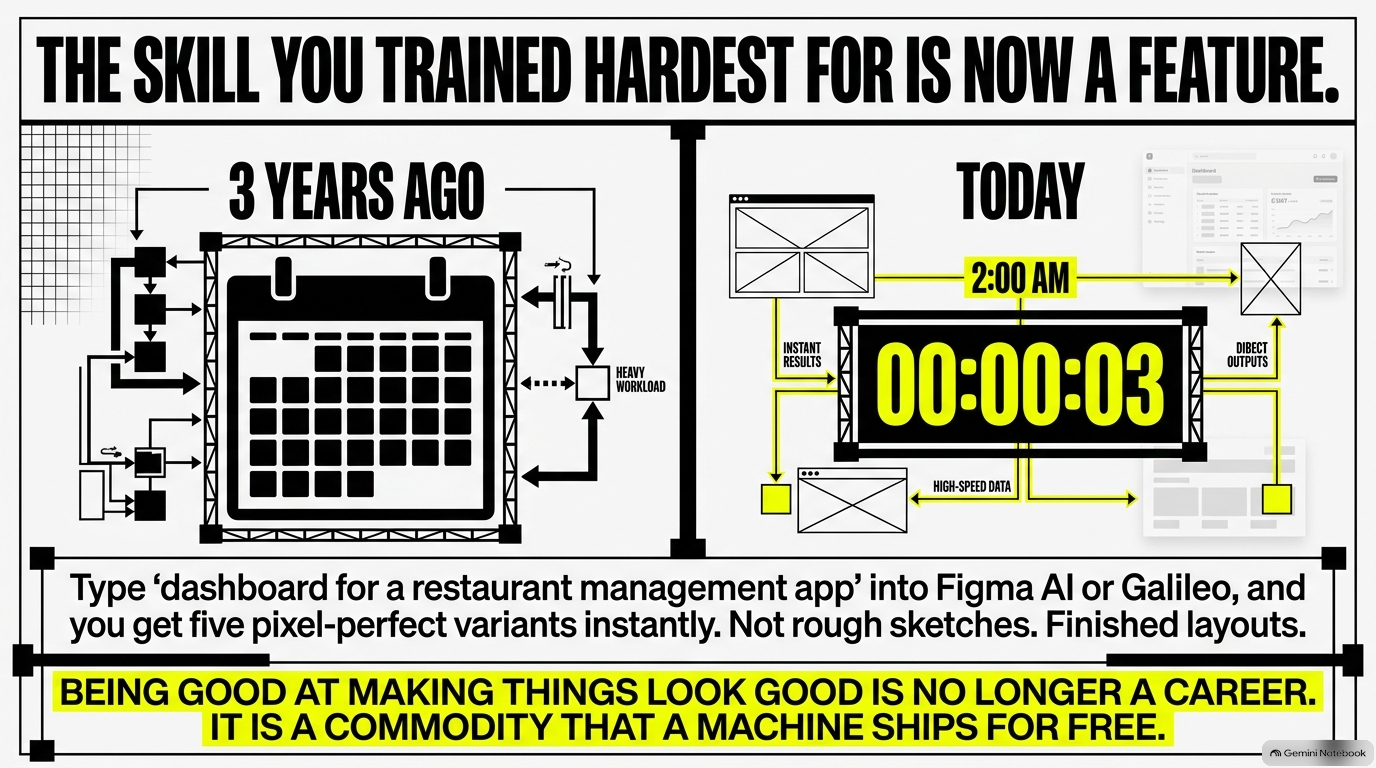
Being good at making things look good is no longer a career. It is a feature. And it is a feature that a machine now ships for free.
Type “dashboard for a restaurant management app” into Figma AI, Galileo, or any of a dozen tools, and you get five clean, professional, pixel-perfect variants in seconds. Not rough sketches. Finished-looking layouts. The kind of work that, three years ago, would have taken a skilled visual designer a full day and anchored an entire portfolio. That skill, the one so many of us trained hardest for and are proudest of, has been commoditized. Quietly, completely, and permanently.
This is not a doom piece. It is the opposite. Because once you accept the uncomfortable part, something genuinely freeing becomes obvious about where the real value in this field has moved, and it is somewhere far more durable than aesthetics ever were.
In this issue:
The skill that just got commoditized
Why “it looks great” stopped being a compliment
What AI still cannot do, precisely
Design as infrastructure, not decoration
Where your career value actually lives now
Resource Corner
The skill that just got commoditized
Let’s be precise about what happened, because vagueness here helps no one.
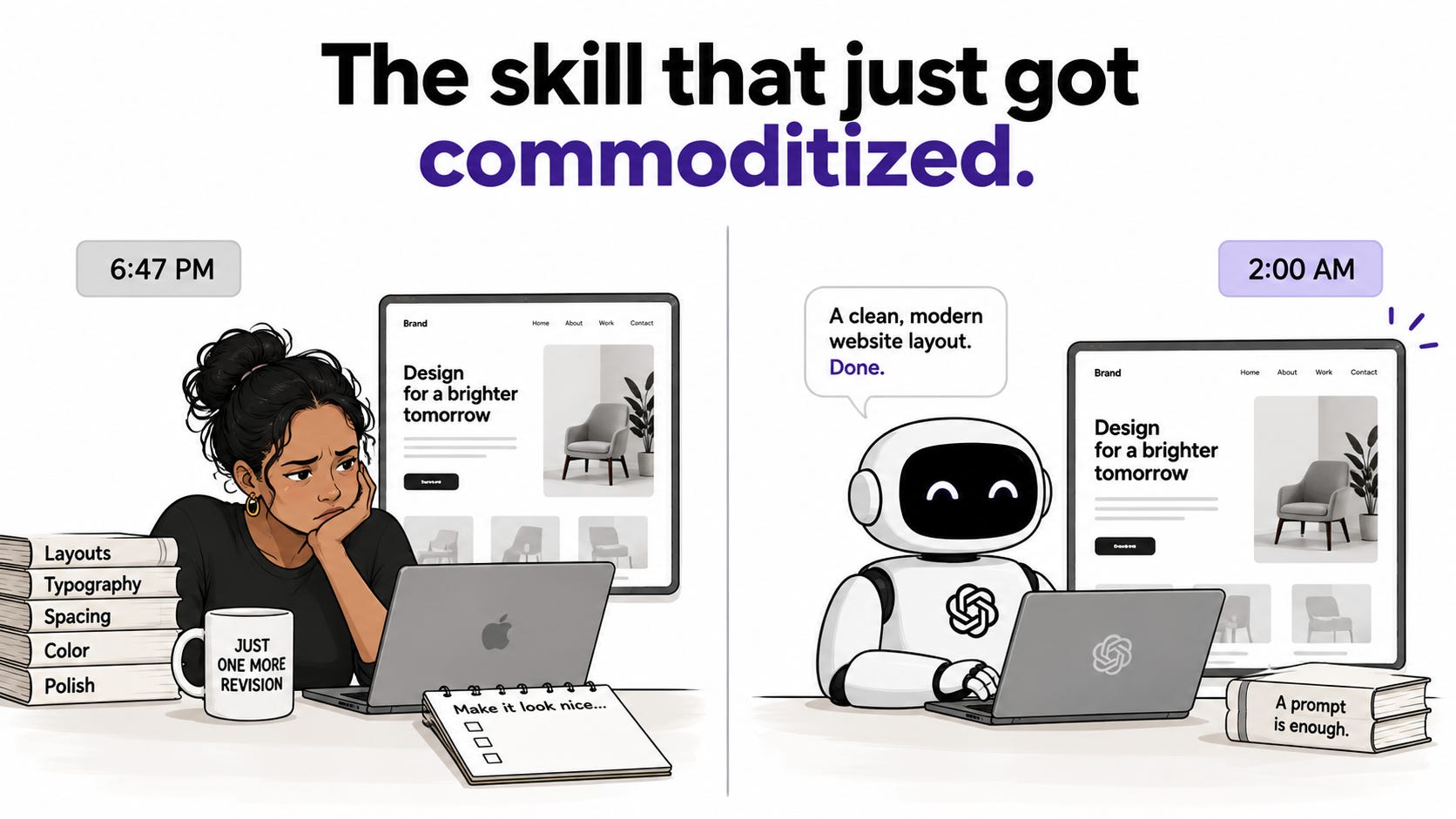
The reality of 2026 is blunt: AI commoditized pixel-perfect design. Tools generate clean, professional layouts in seconds, which means visual styling, the arrangement of elements, the polish, the “make it look nice” layer, is no longer a competitive advantage. It is table stakes. The floor. Something everyone has access to, including the product manager who does not know what a design system is.
This is genuinely hard to hear if your identity is built on visual craft. For a long time, being the person who could make something look clean and professional was a real, defensible edge. It got you hired. It filled your portfolio. It was the thing people complimented. And now a text prompt does a competent version of it instantly, for free, at 2am, without complaint.
Denial is the natural response, and it is the dangerous one. Plenty of designers are quietly betting that AI’s output is not “really” good enough, that clients and companies will always want the human touch on the visuals. Some will. But the market has already decided that for a huge category of work, good enough is good enough, and “good enough, instant, and free” beats “excellent, slow, and expensive” more often than anyone in this field wants to admit.
The designers getting hurt right now are the ones whose value was concentrated in the exact layer that got automated. The ones thriving figured out that the layer was never the point.
Why “it looks great” stopped being a compliment
Here is a shift in language worth noticing, because it tells you everything.
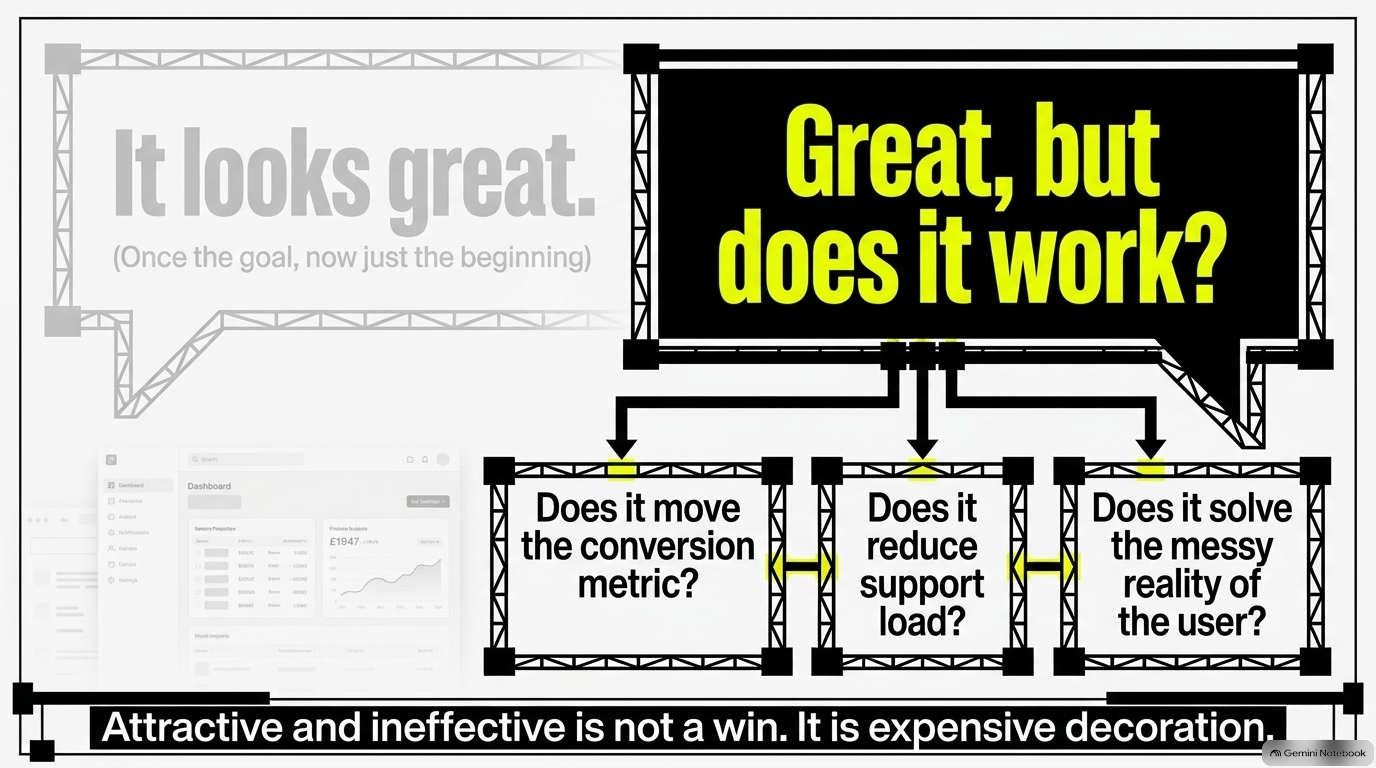
“It looks great” used to be the goal. Now, increasingly, it is the beginning of a harder question: great, but does it work? Does it move the metric? Does it solve the actual problem the business has? Does it account for the messy reality of the person using it?
The uncomfortable framing making the rounds in the field is that beautiful design no longer guarantees success, and in 2026 designers compete on strategy and metrics, not aesthetics. That is a real reordering of what the job is. A beautiful interface that does not improve conversion, reduce support load, increase retention, or solve a genuine user problem is now, in business terms, close to worthless. Attractive and ineffective is not a win. It is expensive decoration.
This stings because aesthetics are visible and satisfying. You can see a beautiful screen. You can put it on Dribbble. It feels like accomplishment. Strategy, judgment, and outcomes are far less photogenic. But they are what the market now pays for, and the gap between “designers who make things pretty” and “designers who make things work” is becoming the defining divide in who advances and who stalls.
The compliment that matters now is not “that’s beautiful.” It is “that changed what happened.”
What AI still cannot do, precisely
Now the freeing part, and it is worth being specific rather than reassuring-but-vague.
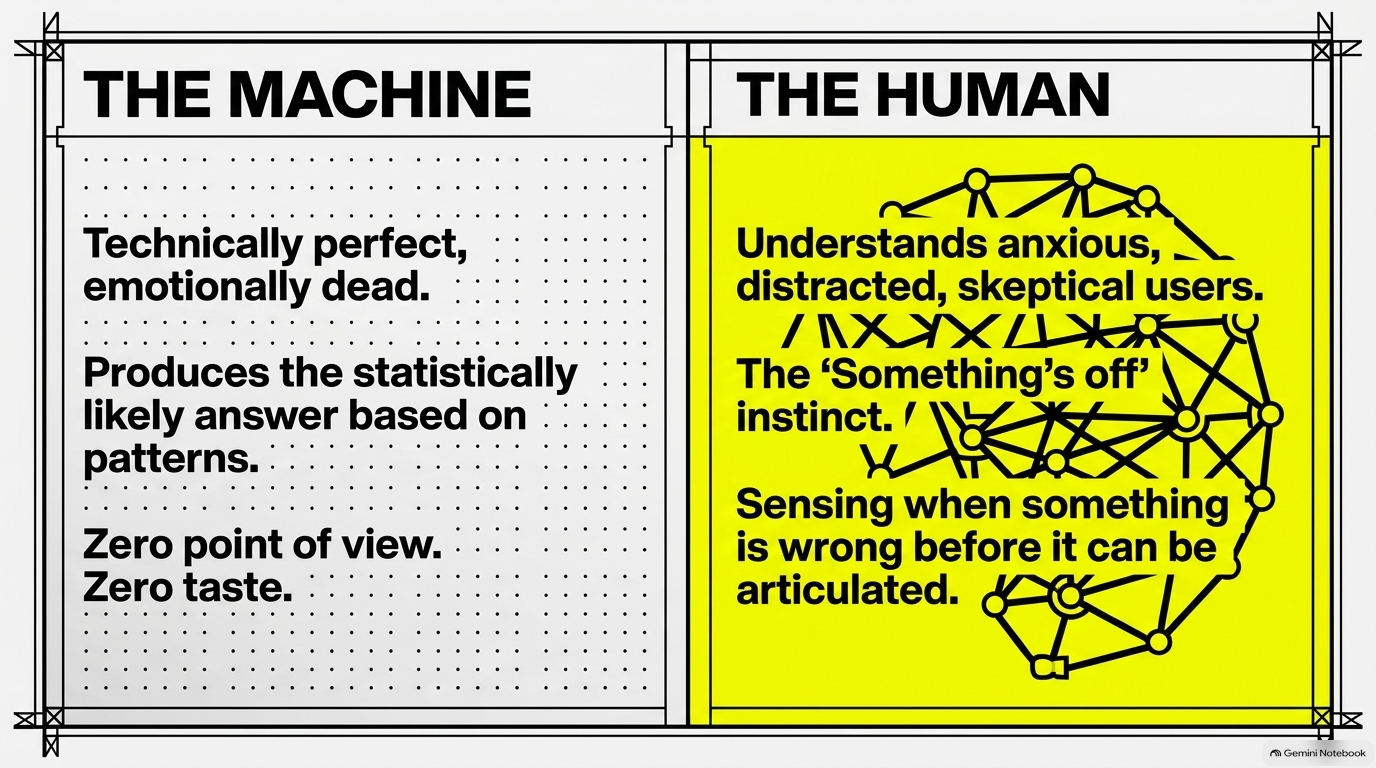
AI can generate a polished, high-fidelity UI that is technically perfect and emotionally dead. That phrase is worth sitting with. The machine produces something correct, balanced, competent, and completely without a point of view. It has no taste. And critically, it lacks the “something’s off” instinct, that gut sense a good designer has that something is wrong before they can even articulate why.
That instinct is not mystical. It comes from understanding the messy, irrational context of human trust. The knowledge that this particular user, in this particular moment, anxious and distracted and skeptical, needs to feel something specific that no prompt can specify because the person prompting does not even know to ask for it. AI averages. It produces the statistically likely answer. It cannot produce the right answer for a specific human in a specific situation, because it does not understand humans or situations. It understands patterns.
This is the whole game now. AI is extraordinary at production and useless at judgment. It can make the thing. It cannot decide whether the thing is worth making, whether it actually serves the person, whether it solves the real problem or a surface version of it, or whether something about it is quietly wrong. Those decisions require a human who has paid genuine attention to other humans, and that is exactly what this field, at its best, has always been.
The value did not disappear. It moved from the hand to the head.
Design as infrastructure, not decoration
The most useful reframe in all of this: design is becoming infrastructure, not decoration.
Decoration is the layer AI took. It is the surface, the polish, the visual arrangement. Infrastructure is everything that decoration sits on top of: the structure of the problem, the logic of the system, the decisions about what to build and why, the connection between a design choice and a business outcome, the deep understanding of the user that determines whether any of it works.
Infrastructure is harder to see and impossible to automate, because it requires understanding context that lives outside the design file entirely. What does this business actually need? What is this user actually struggling with? What decision does this work need to support? What happens across the whole system when this one thing changes? AI has no access to any of that. It only has the prompt.
This reframe also explains why the roles surviving and thriving are the ones anchored in infrastructure. Design systems. Strategy. Research. Complex problem-solving. Understanding users deeply enough to make judgment calls no machine can make. These are not more advanced versions of visual design. They are a different job entirely, one that uses visual craft as a tool rather than treating it as the product.
The designers who spent the last few years going deep on infrastructure are, right now, quietly relieved. The ones who went deep only on decoration are, understandably, quietly terrified. That gap is not about talent. It is about which layer they bet their career on.
Where your career value actually lives now
So what do you do with all this? Concretely.
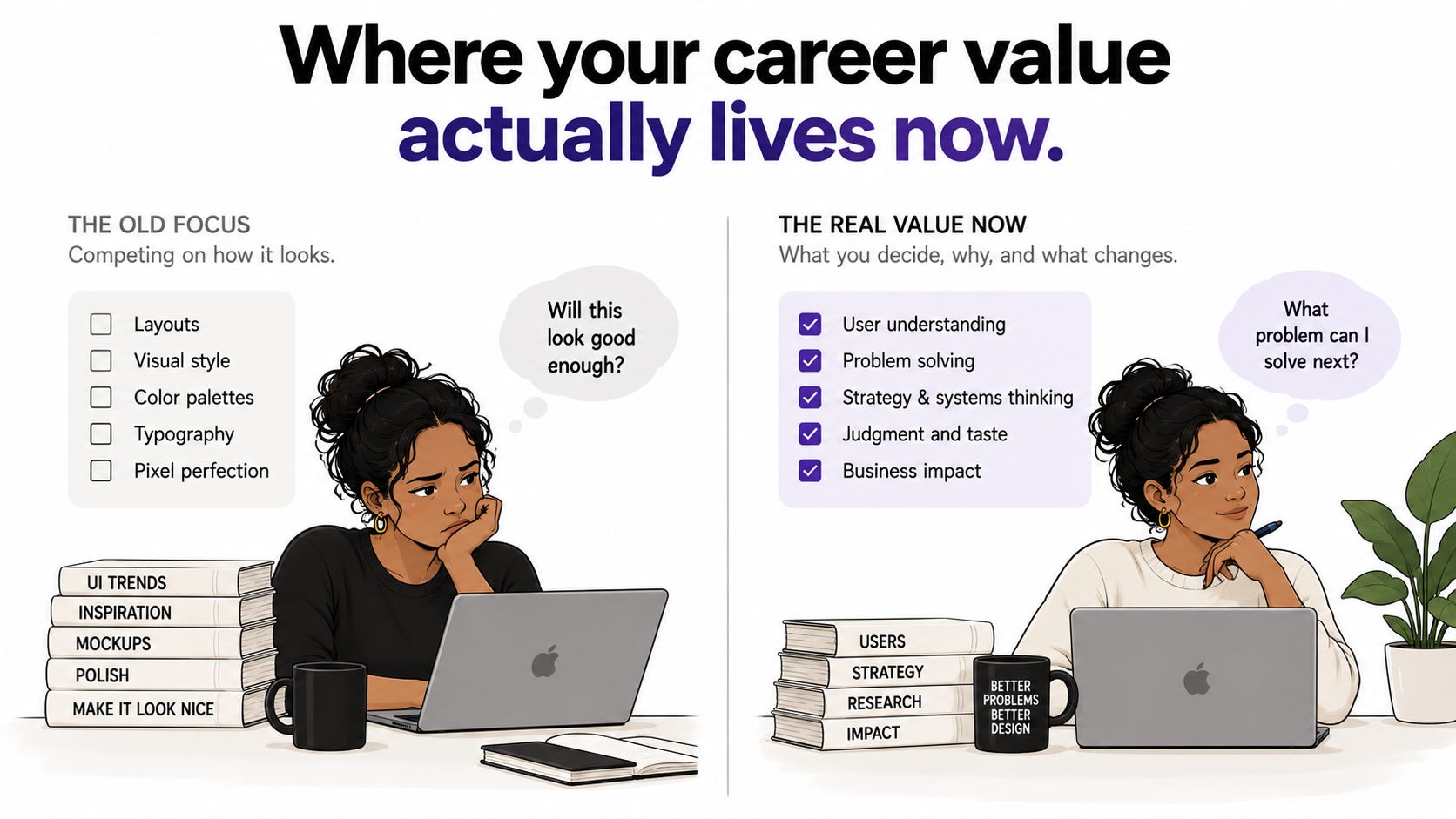
✅ Stop competing on the layer that got automated
If your portfolio, your pitch, and your sense of your own value all center on how good your work looks, you are competing directly with a free machine. Move your center of gravity to what you decided, why, and what changed because of it. Visual craft becomes a tool you wield, not the thing you sell.
✅ Go deep on the “something’s off” instinct
The judgment, taste, and human understanding that AI lacks are learnable and sharpenable. Study why things work, not just how to make them. Pay obsessive attention to real users. Develop the ability to sense when something is wrong before you can explain it, and then the ability to explain it. That instinct is now your most valuable and most defensible asset.
✅ Use AI to move faster on production, not to define your value
This is not anti-AI. Use the tools. Generate the ten variants. Let the machine handle the production layer at speed. Then spend the time you saved on the judgment layer, the part that actually determines whether the work is good. The winners are not avoiding AI. They are using it to get out of the decoration business faster.
✅ Anchor yourself in something AI cannot reach
Research. Strategy. Systems thinking. Deep domain understanding. Complex problem-solving. Pick a form of value that lives in context and judgment rather than production, and build genuine depth there. That is where the durable careers are being built.
✅ Learn to speak in outcomes, not aesthetics
When “it looks great” stops being a compliment, “it works, and here is the proof” becomes your language. The ability to connect design decisions to business and user outcomes is what separates the designers the market fights over from the ones it automates around.
Quick pause. This belongs in the room.
🎯 FALL TECH HAPPY HOUR
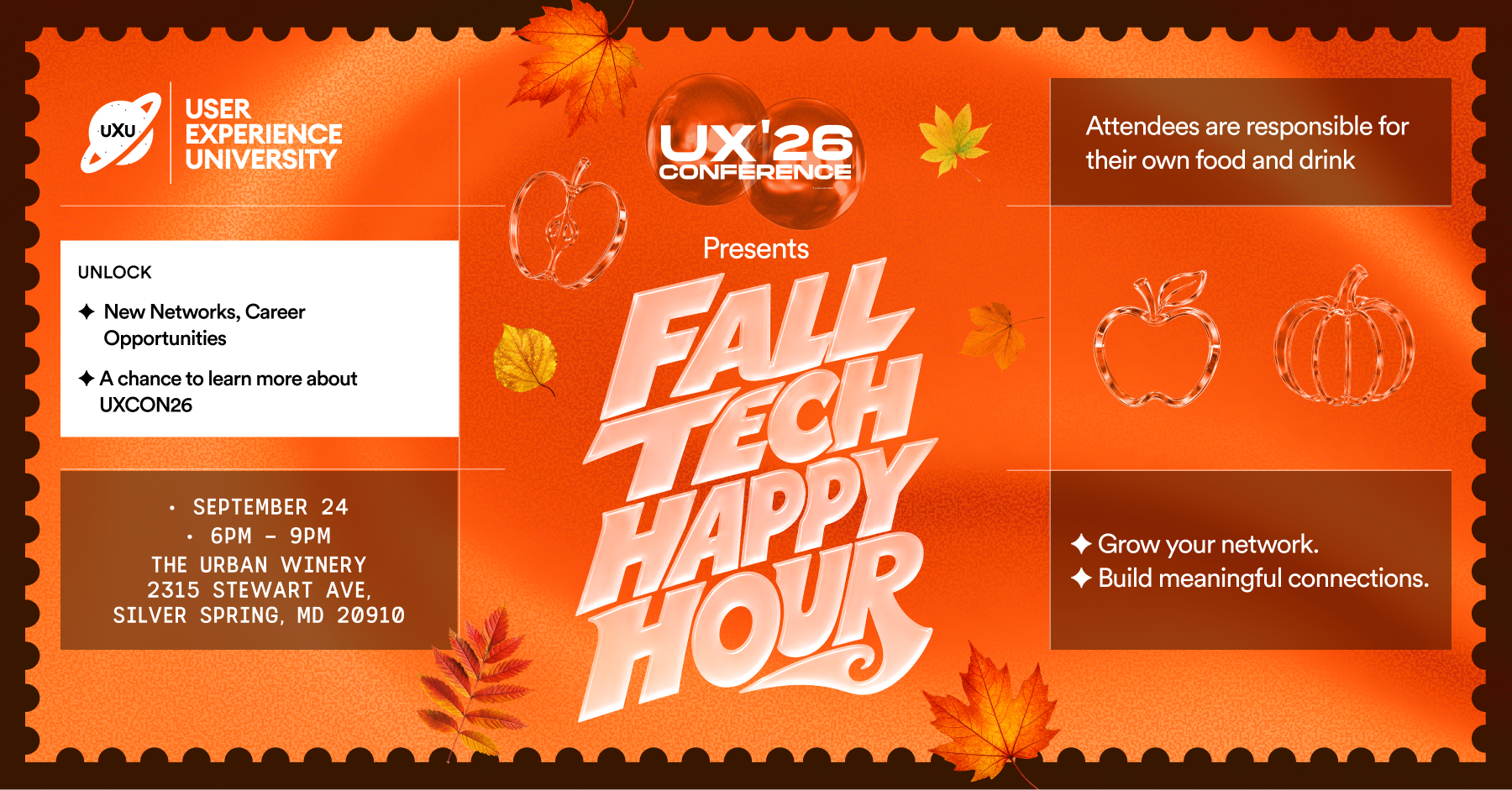
The job market shifted. The way people hire shifted with it. Warm intros beat cold applications. A five-minute conversation beats a hundred cover letters. And the people who get ahead aren’t the ones refreshing job boards, they’re the ones already in the room.
This is that room.
DMV’s UX, product, design, and tech community, in one place, for one evening. No stage, no pitch, no agenda. Just the people who can actually move things forward for you, face to face.
Fall Tech Happy Hour. September 24. The Urban Winery, Silver Spring.
📦 Resource Corner
Why Beautiful Design No Longer Guarantees Success (dev.family)
The piece that argues design is becoming infrastructure, not decoration, with a clear-eyed take on what AI commoditized and what it did not. A bracing, useful read even where you want to argue with it.
UX Design 2026+: From Producing to Deciding (UX Raspberry)
The source of the “something’s off” instinct framing and the junior paradox. One of the sharpest articulations of how the job is shifting from craft to judgment.
The Design of Everyday Things by Don Norman
The foundational argument that design was always about function and human understanding, not appearance. More relevant now than when it was written. Read it again with 2026 eyes.
Articulating Design Decisions by Tom Greever
If you are shifting from “it looks great” to “here is why this works,” this is the book on making that case to stakeholders. The skill of the moment.
The 2025 State of Design and 2026 Predictions (Design Buddies)
An honest, human, occasionally funny look at what the community actually lived through and where it is heading. Good for perspective and for feeling less alone in the disruption.
💭 Final Thought
We opened by saying beautiful design is worthless, and we should be honest: that is a provocation, not a literal truth. Beauty still matters. Craft still matters. A thing that works and is beautiful will always beat a thing that works and is ugly.
But the point stands, and it is the point worth carrying. Beauty is no longer scarce, and scarcity is where value comes from. When a machine can produce competent, attractive work instantly and for free, the market stops paying a premium for attractive. It starts paying for the thing that is still scarce: judgment, understanding, taste, the ability to know what is worth building and whether it actually works for a real person.
That should not frighten anyone who got into this field for the right reasons. If you became a designer because you love making things pretty, this is a hard season. But if you became one because you are fascinated by people, by problems, by the strange gap between what someone says they want and what they actually need, then the machine did you a favor. It took the commodity work off your plate and left you with the part that was always the point.
The pixels are handled now. The thinking is not. Go be irreplaceable at the thing no machine can do.


