



UX Gameboard Reveal: Last Week’s Winner!
Scenario Recap
Last week, we asked:
A UX team presents their quarterly report:
12 usability tests completed
4 surveys sent
Average satisfaction score: 4.3
Leadership asks:
“So… what changed because of this?”
Your Challenge
Identify 1–2 reasons why these UX metrics failed to influence leadership.
Suggest one UX metric that would better demonstrate real impact.
💬 Think you knew the answer? Let’s see what stood out!
Featured Answer: Ikraj
1. Reasons why these UX metrics fell short:
Decontextualized: A 4.3 satisfaction score alone doesn’t reveal much. Is that good? Low? How does it compare to previous quarters? Without context, leadership can’t act.
Problem-Focused: While a satisfaction score signals issues, it doesn’t connect to business outcomes like retention or revenue. A 4.3 might indicate a problem, but it doesn’t show impact.
2. Suggested UX metric for real impact:
Retention Rate: Instead of just reporting usability tests or survey numbers, tracking retention shows whether UX improvements are helping users return to the product.
Usability testing and surveys guide what changes to make, and retention shows whether those changes worked.
👏 This was a great example of connecting UX metrics to meaningful business outcomes!
Takeaway
Metrics are only as valuable as the story they tell.
Numbers alone don’t influence decisions, context and alignment with business goals do.
Today’s Topic: How to Turn Stakeholders into Allies
Quick Take
Stakeholders can accelerate your product - or slow it down.
Building allies isn’t about authority; it’s about empathy, communication, and shared goals.
This week’s Gameboard Challenge will help you practice turning influence into partnership.
Why Stakeholders Matter
Your research, designs, and solutions only go as far as the people who approve and implement them.
Stakeholders are human. They have goals, constraints, and perspectives.
Winning them over means your UX recommendations get implemented, not ignored.
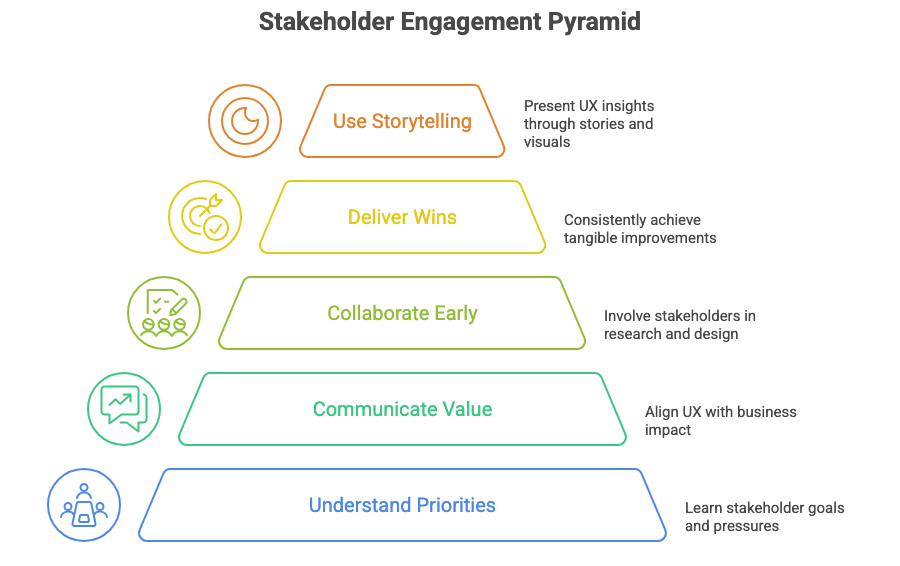
How to Turn Stakeholders into Allies
Understand their priorities
Learn what success looks like from their perspective. What are their pressures and KPIs?Communicate UX in terms they care about
Show how your work aligns with business impact retention, adoption, efficiency not just screens.Collaborate early and often
Involve stakeholders in research findings and design decisions. Early participation builds ownership.Deliver small wins consistently
Stakeholders notice results. When your insights lead to tangible improvements, trust grows.Use storytelling and visuals
Present UX insights in concise stories or visuals. People remember stories, not spreadsheets.
When done right, stakeholders become advocates, not blockers.
Great software doesn’t come from silos…. it comes from relationships.
At UXCON25, Jeremy Miller reminded us of something we often overlook: we obsess over empathy for users, but forget the humans sitting across the table from us.
Why it matters:
Software is a team sport. And teams thrive only when trust, communication, and empathy exist beyond job titles. When you see stakeholders as people, not just positions, collaboration stops being transactional and starts becoming transformative.
How To Start Building Stakeholder Relationships:
Listen Before You Present
Ask about their goals, pressures, and priorities. Understanding what matters to them makes your UX recommendations more persuasive.
Communicate in Their Language
Not every stakeholder thinks in wireframes. Connect UX work to business outcomes they care about, like retention, revenue, or customer satisfaction.
Share Wins Early and Often
Small victories build trust. Share quick insights, test results, or early successes to show value continuously.
Check In Personally
Empathy isn’t just in meetings. A quick one-on-one or casual conversation builds rapport and reduces friction later.
Key Takeaway:
Empathy isn’t only for users. The relationships you nurture inside your organization are just as crucial to building exceptional software.
🎟️ Experience UXCON26 for Yourself
These are the kinds of conversations UXCON26 is all about, the ones that take collaboration from “just another meeting” to moments that actually change how you design, influence, and build software.
In honor of MLK Day, we have opened a short Early Bird window for UXCON26, available till Thursday night.
UXCON26 is more than an event…. it’s an investment in the ideas, skills, and conversations shaping the future of work.
🎟️ Early Bird ends in 24hrs .
UX Gameboard Challenge
Scenario
Samara, a UX researcher, uncovers a major usability issue in the checkout flow.
She emails the Product Manager a long report.
The PM replies: “Noted. We’ll see if we can fix it.”
Weeks later, nothing changes.
Your Challenge
Identify 1–2 reasons why Samara’s insight failed to gain traction.
Suggest one approach she could use to win stakeholders over and increase adoption of her recommendations.
💬 Think you know the answer? Drop your thoughts in the comments — your response might be featured in next week’s Gameboard reveal!
Take-Home Exercise (5–10 minutes)
Think of a stakeholder you work with regularly.
Write down their top three goals or pressures.
Identify one UX insight you could present that directly aligns with those goals.
Draft a 2–3 sentence message to communicate your insight using their language.
This exercise trains you to frame UX in ways stakeholders understand and act on.
Quick Tip: Influence Without Authority
Focus on shared goals, not titles.
When stakeholders see that UX aligns with what they care about, you gain influence naturally.
See you next Wednesday.
Remember: You can’t build great products alone, but you can build great outcomes together.


