



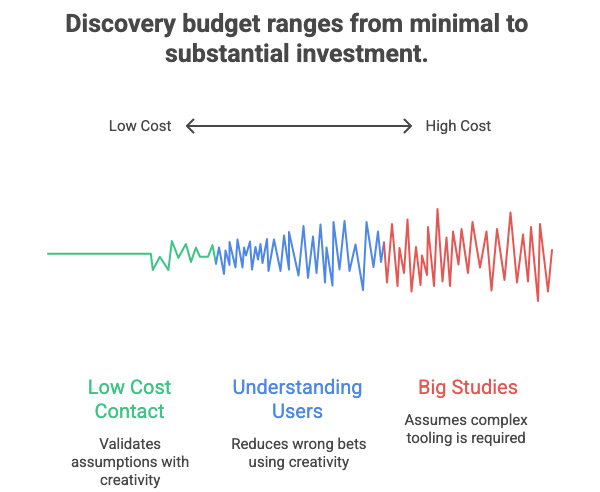
Discovery does not fail because there is no money.
It fails because teams assume it requires big studies, panels, or complex tooling.
The strongest product sense often comes from low cost contact with reality.
This issue is a guide to validating assumptions, understanding users, and reducing wrong bets using creativity instead of cash.
In This Issue
• What discovery actually means
• The traps of expensive research
• Low budget methods that work
• How to choose what to test
• Example cheap discovery loops
• Resource Corner
But first….
What discovery actually means
Discovery is about reducing uncertainty before building.
Uncertainty means not knowing if something will work for real users.
Discovery answers questions like:
• Do users have the problem we think they have
• How are they solving it today
• What alternatives exist
• What would real usage look like
• Will this be worth building
If discovery works, the idea becomes clearer and less risky.
The traps of expensive research
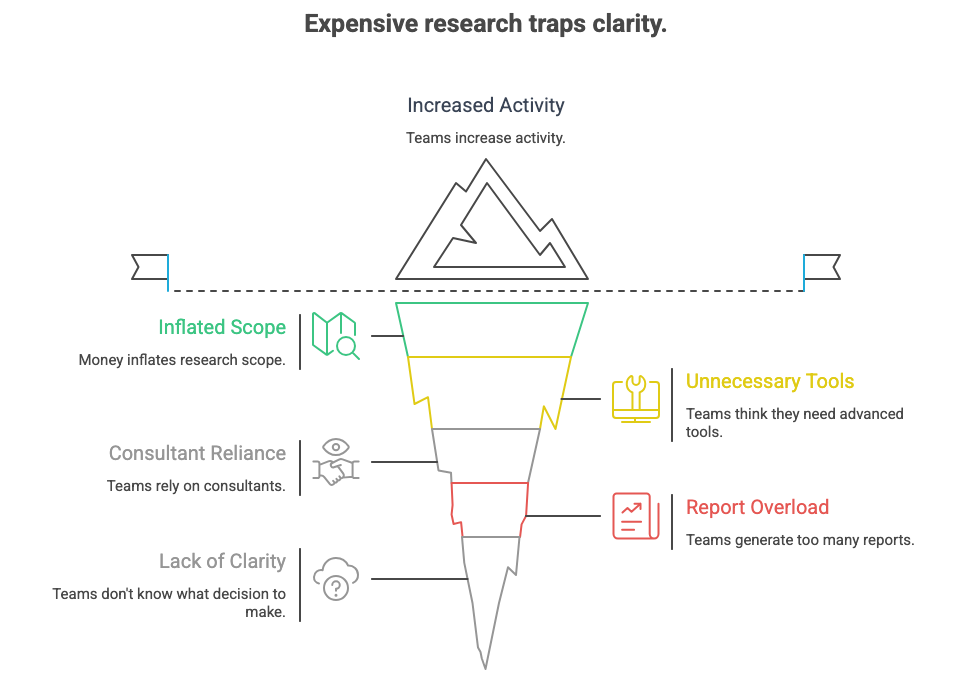
Money tends to inflate scope.
Teams start by thinking they need:
• Panels
• Surveys
• Advanced tools
• Consultants
• Reports
These increase activity but not necessarily clarity.
Clarity means knowing what decision to make next.
Discovery is not about proof. It is about direction.
Low budget methods that actually work
Here are methods that require either no money or very little money, and still give strong signals.
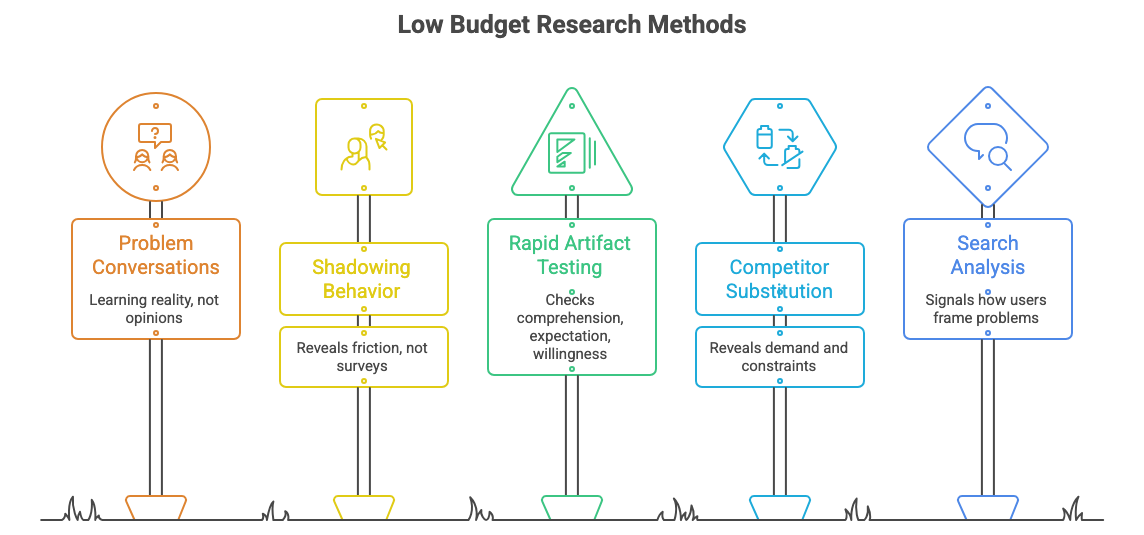
1. Problem Conversations
Reach out to real people and ask about the problem, not the solution.
A problem conversation means asking how they currently handle the situation you are exploring.
The goal is to learn reality, not extract opinions.
2. Shadowing Existing Behavior
Observe how people currently solve the problem.
Shadowing means watching users perform tasks in their natural environment without instruction.
This shows friction that surveys cannot reveal.
Friction means anything that slows down or confuses the user.
3. Rapid Artifact Testing
Use rough prototypes to check comprehension, expectation, and willingness.
An artifact can be a simple mockup, a clickable flow, or even a sketch.
Quality of insight beats quality of visuals.
4. Competitor Substitution
Find where users go instead of using your solution.
Substitution means alternative tools, hacks, templates, or manual workflows.
Substitutes reveal both demand and constraints.
5. Search Analysis
Look for patterns in what users search for online.
Search analysis means extracting keywords, questions, and language users naturally use.
Language signals reveal how users frame the problem.
Framing means how someone defines the situation in their own words.
How to choose what to test first
Discovery does not test everything.
It prioritizes what could break the idea fastest.
These are called assumptions.
An assumption is something you believe to be true that has not yet been validated.
There are three assumption types:
• Market
Do people care about this problem at all
• Value
Will people find a solution useful enough to adopt
• Usability
Can people actually use it without confusion
Start with market.
If the market assumption fails, nothing else matters.
Example cheap discovery loops
Here are two realistic loops teams can run with almost no money.
Loop 1: Problem Existence
Identify the problem you think users have
Talk to 5 to 7 real people who experience it
Listen for patterns in how they solve it today
Capture frequency and intensity signals
Decide if the problem is real enough to pursue
Frequency means how often the problem occurs.
Intensity means how painful or important it is to solve.
Cost: zero to small.
Loop 2: Value Test
Create a simple description of the solution
Show it to people who confirmed the problem
Ask if they would switch from their current solution
Observe hesitation, not excitement
Decide if adoption is believable
Adoption means people choosing to use a new solution over their existing one.
Cost: near zero.
What you absolutely do not need
Beginners often assume they need:
• Tools
• Panels
• Huge samples
• Formal reports
• Statistical perfection
Discovery is about speed and direction.
Refinement comes later.
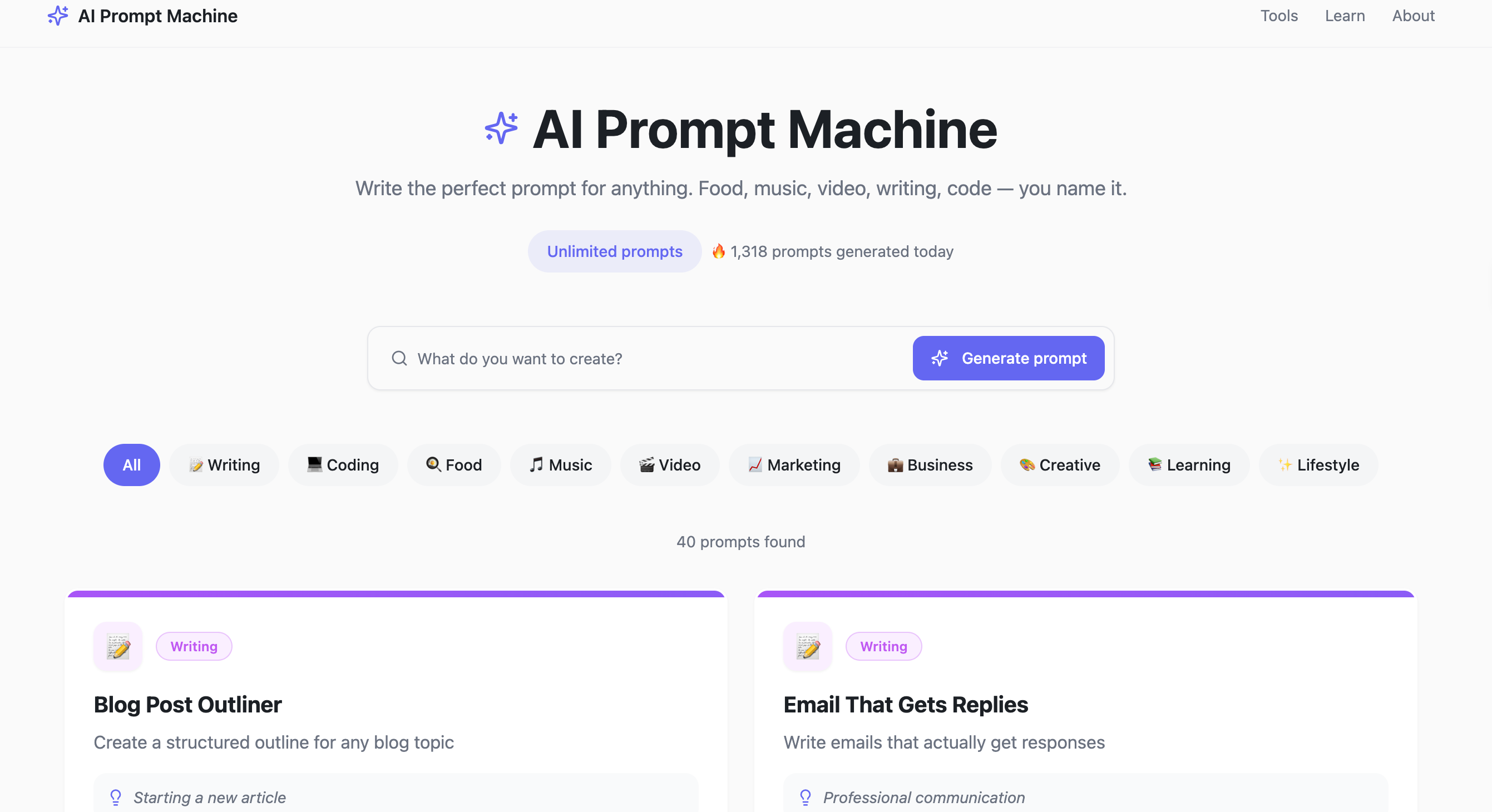
Tool of the week: Prompt Machine
Prompts are the new interface. If you’ve ever stared at a blank chatbox wondering how to ask AI the right thing, this tool fixes that.
We built this Prompt Machine helps you craft effective prompts for almost any task so you get sharper, faster, more useful outputs.
Resource Corner
Discovery Foundations
Teresa Torres
https://www.producttalk.org/continuous-discovery-habits
Running a Website Discovery on a budget
Take Home Exercise
Pick an idea you have been considering.
Then run this tiny discovery loop this week:
Write down the core problem you believe exists
Talk to 5 people who could plausibly have that problem
Ask only about their current workaround
Write down what they already do, not what they say they want
Decide if the problem is real, frequent, and meaningful
If the answer to all three is yes, move to a value test.
If not, do not build. You just saved time and money.
Final Thought
Discovery is not expensive.
Wrong bets are.
With small loops and direct reality checks, you can learn enough to make better decisions without waiting for budget or permission.
Discovery rewards curiosity, not scale.


